Surgical procedure
Otoplasty in Australia.
Also known as: ear pinning
Otoplasty is surgery to reshape or reposition the cartilage of the external ear, most commonly to address prominent ears (those that project more than 20mm from the side of the head) or asymmetry. Performed under local anaesthesia with sedation or general anaesthesia depending on patient age, it is regulated under the AHPRA July 2023 cosmetic-advertising guidelines.
Editorial guide
What is otoplasty?
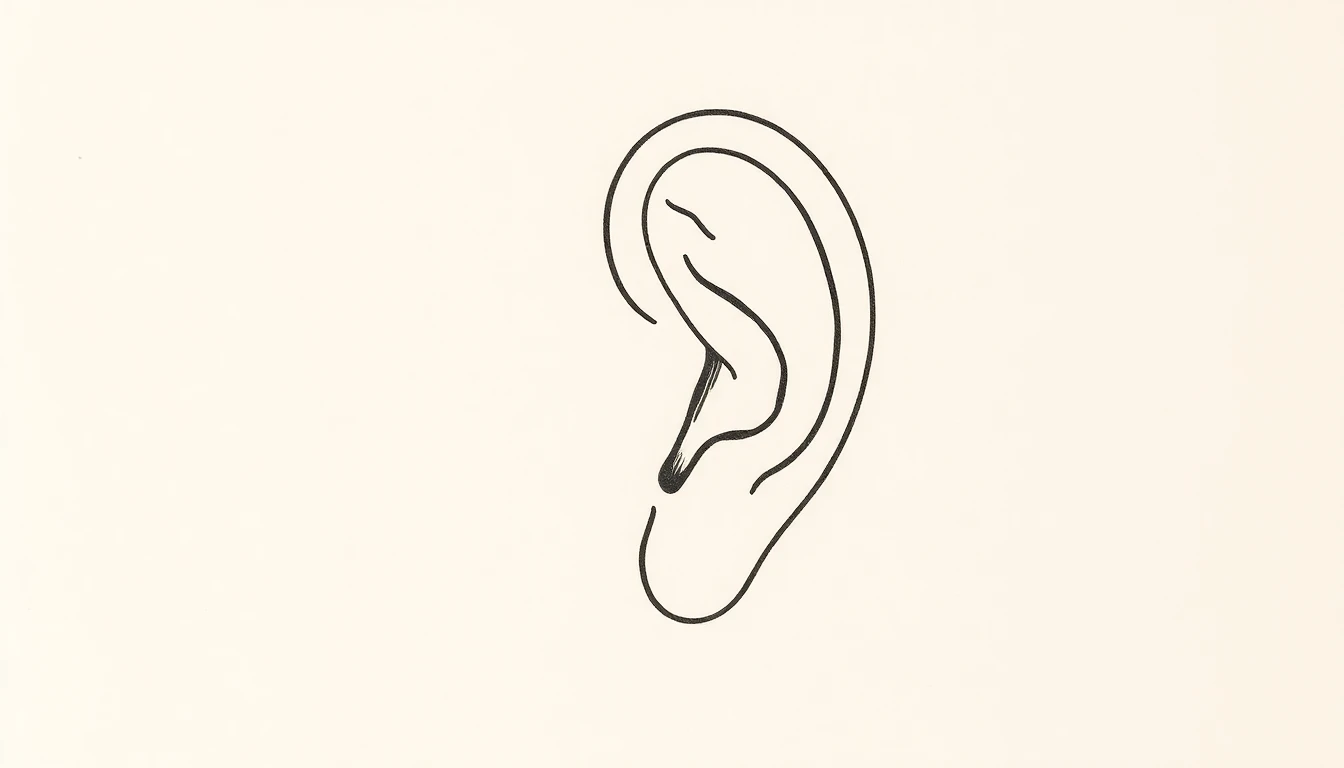
Otoplasty addresses the appearance of the external ear — most commonly correcting prominence (where the conchal bowl is over-developed and/or the antihelical fold is poorly formed). Less commonly the procedure addresses ear asymmetry, lobule deformities, or post-traumatic shape changes. It is one of the few cosmetic procedures routinely performed on children, where psychological benefit during school years is well documented.
How otoplasty works
An incision is made behind the ear in the natural sulcus. The cartilage is exposed, and shape is corrected using a combination of permanent retention sutures (Mustardé sutures to recreate the antihelical fold, Furnas sutures to set back the conchal bowl) and limited cartilage scoring or excision where indicated. Skin is closed with absorbable sutures. A bulky dressing is worn for the first week, followed by a headband at night for several weeks.
Who is otoplasty for?
Children from around age 5–6 with established prominent-ear deformity, and adults seeking correction at any age. Patients with active eczema or skin infection in the area need this resolved first. Patients with body dysmorphic disorder are not appropriate candidates.
What drives the cost
Typical Australian cost is $4,000–$6,000 under local anaesthesia in adults, $6,000–$9,000 under general anaesthesia (more common for children). Bilateral correction is included; unilateral surgery is rarely appropriate because matching an existing ear is harder than reshaping both.
Recovery and downtime
A bulky dressing for 5–7 days; mild bruising and swelling for 1–2 weeks. Most adults return to desk work after 5–7 days. Children return to school after 1–2 weeks but may need to skip contact sport for 6 weeks. A headband worn at night for 4–6 weeks reduces the chance of recurrence while sutures bed in.
Choosing a surgeon
Specialist Plastic Surgeon or Specialist ENT registration confirmed on the AHPRA register. Ask about annual otoplasty volume — this is a low-volume procedure for many practitioners and a small number of cases per year is reasonable; a surgeon performing more than 20 a year is well experienced. Ask to see un-retouched photos taken at consistent angles.
Before you book
- Confirm AHPRA specialist registration
- Ask whether the surgery will be performed under local or general anaesthesia
- Confirm hospital accreditation
- Discuss return-to-school or work timeline if relevant
- Use the seven-day cooling-off period to seek a second opinion
- Get a written, itemised quote
Red flags
- 'Stitch-only' techniques performed by non-specialists in suburban shopfronts
- Cartilage-cutting approaches without retention sutures (high recurrence)
- Aggressive promotion of unilateral surgery without symmetry assessment
- Quotes that don't separately list anaesthetist and facility fees
- Practitioners using the title 'cosmetic surgeon' without specialist registration
What otoplasty (ear pinning) costs in Australia
Itemised view of where the $4,000 – $9,000 typically goes. Quoted prices vary by surgeon experience, hospital, and case complexity — these shares are indicative.
| Component | Typical share | Indicative range |
|---|---|---|
| Surgeon fee | 50% | $2,000 – $4,500 |
| Anaesthetist fee | 12% | $500 – $1,100 |
| Hospital or day-surgery fee | 25% | $1,000 – $2,250 |
| Garments and supplies | 3% | $100 – $250 |
| Follow-up and reviews | 5% | $200 – $450 |
| Pathology, imaging, and other | 5% | $200 – $450 |
| Total | 100% | $4,000 – $9,000 |
Source: editorial estimates based on Australian Medical Association advisory notes and publicly disclosed clinic schedules. Actual quotes will vary; ask your surgeon for an itemised written quote before paying any deposit.
Otoplasty (ear pinning) recovery timeline
A typical recovery curve. Individual recovery varies — confirm specific milestones with your surgeon's post-operative plan.
-
Day 0
Procedure day.
No work No exercise -
Day 4
Early recovery.
No work No exercise -
Day 7
Halfway point.
Desk work OK Light only -
Day 14
End of standard recovery window.
Work OK Light only -
Day 28
Final result and return to all activities.
Work OK Normal
Risk profile for otoplasty (ear pinning)
How the most-discussed risks for otoplasty (ear pinning) sit on a frequency-by-severity grid. All cosmetic procedures carry risk; the goal of this view is to help you ask better consent questions, not to dismiss any single complication as unlikely.
| Frequency \\ Severity | Mild | Moderate | Serious |
|---|---|---|---|
| Common | — | — | — |
| Uncommon | — |
| — |
| Rare | — | — |
|
Frequency and severity classifications are editorial summaries based on Australian Society of Plastic Surgeons consent literature and TGA / AHPRA guidance. Your surgeon should explain each risk individually as part of the formal informed-consent process — this matrix is a starting point for the conversation, not a substitute.
How to verify any cosmetic surgeon on AHPRA
AHPRA registration is the baseline credential check for any cosmetic procedure in Australia. The five steps below take roughly two minutes and are the single most important due-diligence step before paying a deposit.
- 1
Open the AHPRA register
AHPRA publishes a free public register of every registered medical practitioner in Australia. Open the official register — never rely on a third-party "verification" site.
- 2
Search by name and "Medical Practitioner"
Search by the practitioner's full name and select Profession: Medical Practitioner. The register returns active registrations only — if the name does not appear, do not proceed.
- 3
Confirm the specialty (or its absence)
Look at the "Specialty" field. A FRACS specialist plastic surgeon will list "Specialist Surgery — Plastic Surgery". Anyone who calls themselves a "cosmetic surgeon" without a recognised specialty is a general medical practitioner under AHPRA — that is a meaningful difference for surgical work.
- 4
Check for conditions, undertakings, or restrictions
The register flags any conditions on a practitioner's registration, including AHPRA undertakings or restrictions. Treat any flag as a reason to ask the practitioner directly what it relates to before booking.
- 5
Verify hospital privileges separately
Hospital privileges are issued by the hospital, not AHPRA. For surgical procedures, ask which accredited hospital or licensed day-procedure centre the operation will take place in, and verify the surgeon has admitting rights there.
FAQ
Common questions
What age is appropriate?
Otoplasty can be performed from around age 5–6 once ear cartilage is largely developed. There is no upper age limit — many adults have the procedure once they are in a position to fund it themselves.
Will the ears stay pinned?
A well-executed otoplasty using cartilage-shaping sutures (Mustardé / Furnas technique) typically produces durable correction. A small percentage of cases will partially recur and may require revision. Avoid clinics promoting 'cartilage-cutting' techniques without antibiotic-bonded sutures.
Is there a non-surgical option?
EarBuddies and similar moulding devices can correct prominent-ear shape in babies under three months, when cartilage remains mouldable. Beyond infancy, surgery is the only durable option. 'Stitch-only' techniques performed by non-surgeons should be approached with significant caution.
Can otoplasty be Medicare-rebatable?
Otoplasty for documented prominent-ear deformity in children may attract a Medicare item number. Adult cosmetic-only correction generally does not. Discuss with your GP and surgeon.
Who should perform otoplasty?
Specialist Plastic Surgeons and Specialist Otolaryngologists (ENT surgeons with cosmetic interest) are appropriate. The procedure is technical and small differences in suture placement materially affect the result, so prioritise a surgeon with annual volume rather than a generalist.